
Hernia Surgery in Birmingham, AL
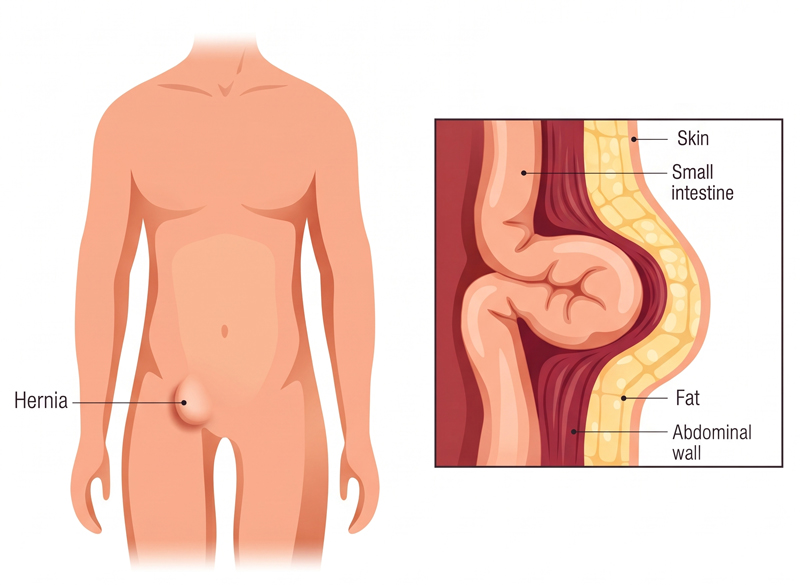
What is a hernia, and why does it need repair?A hernia happens when an organ or tissue pushes through a weak spot in the surrounding muscle wall, causing a bulge, pain, or pressure. Hernias don’t heal on their own. Without treatment, most grow larger and more painful over time. In some cases, tissue can become trapped, which is a medical emergency.
The good news: hernia surgery is one of the most common and successful procedures performed today. At BMI Surgery, our surgeon, Dr. Long, specializes in precise, durable hernia repair designed to relieve your symptoms and lower the chance of the hernia coming back.
Ready to Take the Next Step?
Your first step is a FREE hernia consultation. You’ll meet one-on-one with Dr. Long, get a clear diagnosis, and leave with a personalized plan, whether that’s inguinal hernia removal, umbilical repair, or hiatal hernia surgery. Fill out the form and our team will reach out to schedule your visit.
The Benefits of Laparoscopic Hernia Surgery
Whenever possible, Dr. Long uses laparoscopic hernia surgery, a minimally invasive technique performed through a few small incisions with a tiny camera. Compared with traditional open surgery, patients often experience:
Not every hernia is right for a laparoscopic approach. At your consultation, Dr. Long will recommend the technique that gives you the safest, longest-lasting result, whether that involves open surgery, minimally invasive surgery, or laparoscopic surgery.
Hernia Surgeries We Perform
Groin hernias are the most common. Inguinal hernias show up as a bulge in the groin, especially in men, and inguinal hernia removal and repair pushes the tissue back into place and reinforces the weak spot. Femoral hernias sit lower, near the top of the thigh. They’re more common in women and easy to mistake for inguinal hernias, so an accurate diagnosis matters.
Other hernias form along the abdominal wall. Umbilical hernias appear at or near the belly button, often after pregnancy or from added pressure on the abdomen. Epigastric hernias appear between the belly button and breastbone, and even small ones can hurt and grow. Incisional hernias form at the scar from a previous surgery, so we tailor each repair to its size and location.
A hiatal hernia happens when part of the stomach slides up through the diaphragm. When medication isn’t enough, hiatal hernia surgery returns the stomach to its proper place and tightens the opening to ease symptoms. Whatever type you have, a free consultation is the first step toward the right repair.
Could It Be a Hernia?
Check any symptoms you’ve noticed below, then schedule a free consultation to find out for sure.
*Seek emergency care right away for sudden, severe abdominal pain, or a bulge that turns firm, tender, or discolored, especially with nausea or vomiting.
Meet the Surgeon Behind Your Hernia Repair
Over 25 years of experience in general and minimally invasive surgery. Fellowship Trained in Minimally Invasive & Bariatric Surgery. Certified by the American Board of Surgery.